A GLP-1 side effect tracker for clearer check-ins.
Log nausea, fatigue, reflux and friends in seconds, along with how strong they felt. Over time you’ll see your own patterns.
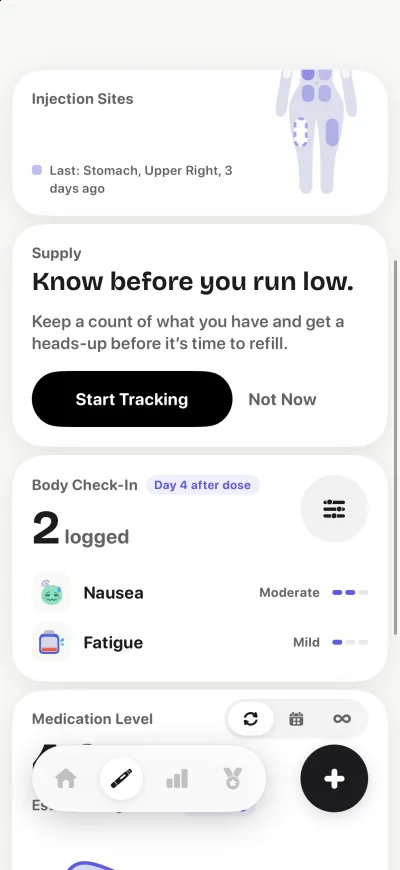
In short: PenPal’s side effect tracker records what you felt and how strongly, on the same timeline as your doses, meals and water. It helps you notice patterns and describe them to your clinician. It doesn’t decide whether a symptom is a side effect.
What is a GLP-1 side effect tracker?
A GLP-1 side effect tracker is a log of the symptoms you notice while on GLP-1 medication: what you felt, how strong it was, and which day it happened. Because it sits next to your doses and meals, patterns are easier to see. It helps you describe your weeks to your doctor. It doesn’t diagnose anything.
For the bigger picture, read the GLP-1 medication tracker guide. It covers everything worth logging, from doses to weight.
Log how you feel
Pick what you’re feeling, such as nausea, fatigue or reflux, and how strong it was. It takes seconds, so it’s easy to do on the days you least feel like typing.
See your own patterns
Because symptoms sit on the same timeline as your doses, meals and water, patterns become easier to spot: a symptom that tends to show up a day or two after a dose, or after larger meals. That makes for a clearer conversation with your clinician. For what to write down, read how to track GLP-1 side effects in a diary.
Share it at your appointment
Include your side effects in a PDF progress report for the dates you choose, next to your doses, weight, nutrition, water and activity. You decide whether to share it, and with whom.
When to reach out
PenPal doesn’t decide whether a symptom is a side effect. If something feels severe or worrying, contact a healthcare professional. In an emergency, use local emergency services.
Read more
- How to track GLP-1 side effects in a diary
- How to make a GLP-1 progress report for your doctor
- What is a GLP-1 medication tracker?
- PenPal FAQ: side effects and sharing with your doctor
PenPal is a tracking companion, not medical advice. It doesn’t diagnose, prescribe or adjust doses. Follow your prescription and talk to your clinician about your treatment.