Protein and fiber, tracked in a snap.
Take a photo of your plate or describe it in a few words. PenPal estimates protein, fiber, calories and macros, and you can fix anything it gets wrong.
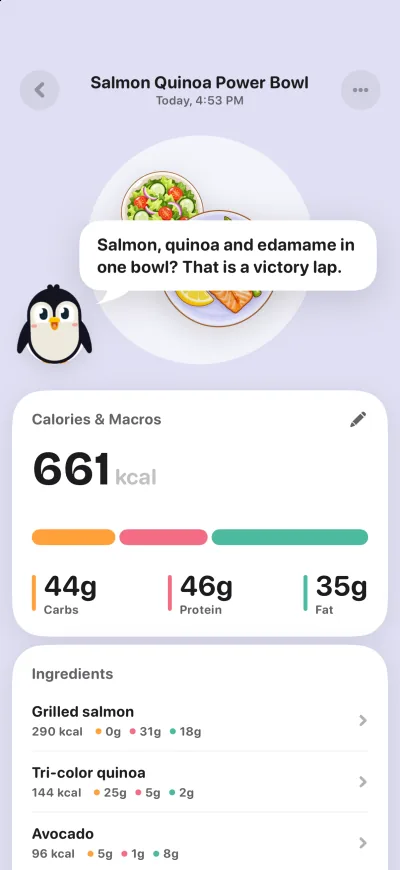
In short: PenPal is a food tracker built around protein and fiber. Snap or describe a meal, and its AI estimates calories, protein, fiber and macros, then scores the meal. Every estimate is editable, and none of it is a prescribed diet.
What is a protein and fiber tracker?
A protein and fiber tracker is a food log that puts those two nutrients first. You record each meal, and it shows roughly how much protein and fiber you ate, meal by meal and day by day. PenPal estimates the numbers from a photo, a few words or a barcode, and you can edit every one.
It’s one part of a bigger log. The GLP-1 medication tracker guide covers what else is worth recording, from doses to weight.
Snap or describe
Point your camera at the plate, or type “two eggs, toast and an apple.” PenPal’s AI estimates calories, protein, fiber and macros in seconds. Estimates can be off, so you can edit anything it gets wrong.
Built around protein and fiber
When portions get smaller, what’s on the plate matters more. PenPal puts protein and fiber first, so you can see at a glance how a meal and your day add up. Your own targets should come from your clinician or dietitian. For a low-effort routine, read how to track protein and fiber on a GLP-1.
Meal scores and awards
Each meal gets a score and, when it earns them, little awards such as Protein Powerhouse or Fiber Rich. Your penguin pal notices every one. It’s encouragement, never judgment.
Water and Apple Health
Log water with a tap, or turn on Apple Health and bring in water, weight, steps, workouts and active energy so there’s less to type. Apple Health data stays on your iPhone.
Read more
- How to track protein and fiber on a GLP-1
- What is a GLP-1 medication tracker?
- PenPal FAQ: AI meal logging and Apple Health
PenPal is a tracking companion, not medical advice. It doesn’t diagnose, prescribe or adjust doses. Follow your prescription and talk to your clinician about your treatment.